
🌲 Seaside · Astoria · Cannon Beach 🌊
Where Kitchen Monk began: fog, spruce, salt air, berries in summer, chanterelles in fall, and a warm pot of soup on a rainy day.
Illustration of Haystack Rock created with AI assistance
Long before anyone called it lifestyle medicine, my grandfather, Kenneth Smith, was bringing healthy food to our neighbors at Ken and Sons Select Market in Seaside. This page is a small tribute to that coast: the places that shaped Kitchen Monk™, the foods each season brings, and a few simple, plant-based recipes you can make on a gray afternoon.
— Nathanael Elijah Smith, FNP-C, DipACLM
On this page: Places that shaped us · The coastal seasons · Three coast recipes · Flourishing in the rain
🌊 Places that shaped us
Seaside
Home of my grandfather’s market and my mother, Momma Eagle. The Turnaround at the end of Broadway marks the symbolic end of the Lewis and Clark Trail, and members of the expedition made salt near here in the winter of 1805–06. Walk the Promenade at sunset and you’ll understand why I keep coming back.
Astoria
Where the Columbia River meets the Pacific. Founded as a fur-trading post in 1811, it’s often called the oldest American settlement west of the Rockies. Hillside Victorian homes, working docks, and river fog: a town that knows how to endure weather and keep going.
Cannon Beach
Haystack Rock rising from the tide flats, tide pools full of sea stars and anemones, and the forested trails of Ecola State Park above the shore. A reminder that slowing down and looking closely is its own kind of medicine.
Just north, at Fort Stevens, the iron ribs of the Peter Iredale, wrecked in 1906, still rise from the sand. In The EVERgreen Chronicles™, that shipwreck comes back to life as the KENSPEED. Read our family story →
🌉 The Astoria–Megler Bridge

Stretching about four miles across the Columbia River from Astoria to the Washington shore, the Astoria–Megler Bridge opened in 1966 and is the longest continuous truss bridge in North America. It rises high on the Oregon side so ships can pass beneath, then runs low across the water for miles. For anyone who grew up here, it’s the shape of home on the horizon: a reminder that the hardest crossings are made one span at a time.
🦅 Momma Eagle’s walk: the Hammond Marina basin
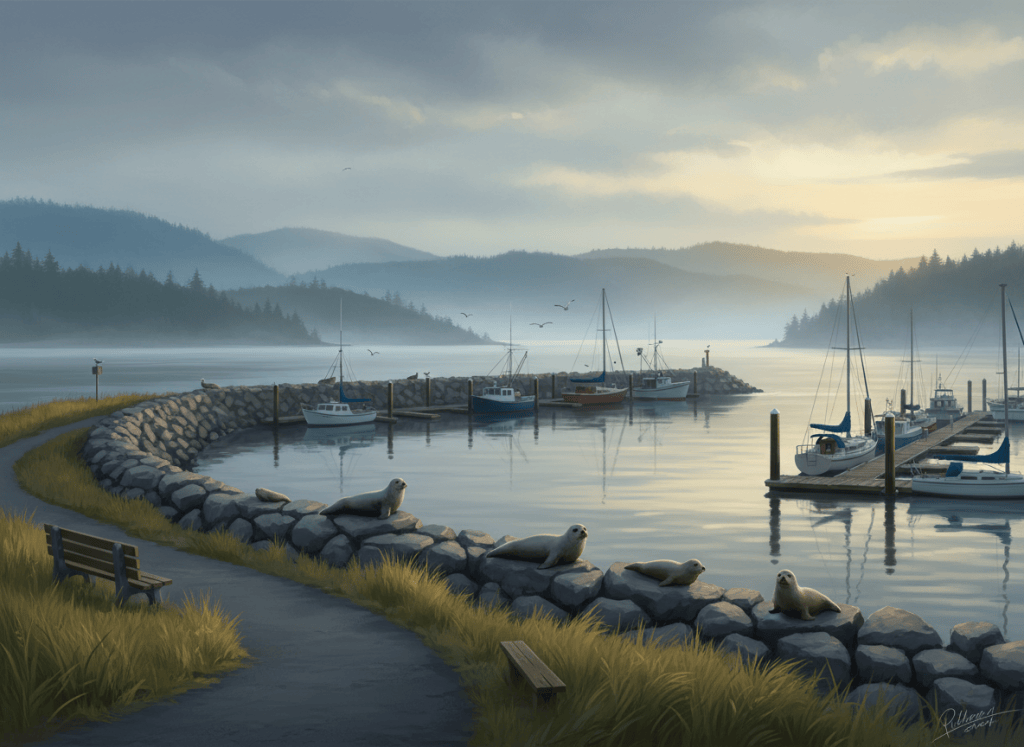
In Hammond, part of Warrenton near the mouth of the Columbia, the Hammond Marina basin is a place of boats, gulls, sea breezes, and a long rock breakwater. Movie fans may recognize that breakwater: it was the backdrop for Willy’s famous jump to freedom in the 1993 film Free Willy, and a Historic Oregon Film Trail sign marks the spot.
It’s also where my mom, Nina, our Momma Eagle, takes her favorite walk. Loop by loop around the basin, she gets in at least 150 minutes of movement every week. That’s the amount of moderate activity U.S. health guidelines recommend for most adults, and she does it with a view of the river, the boats, and the breakwater where Willy found his freedom.
🚶 Find your own “marina walk.” 150 minutes a week can look like 30 minutes on five days, or shorter walks added together. If that feels far away, start with 5 or 10 minutes and build from there; every minute counts. Pick a place you love to look at, and it becomes something to look forward to. If you’re new to exercise or live with a health condition, check with your clinician about what’s right for you.
🍂 The coastal seasons
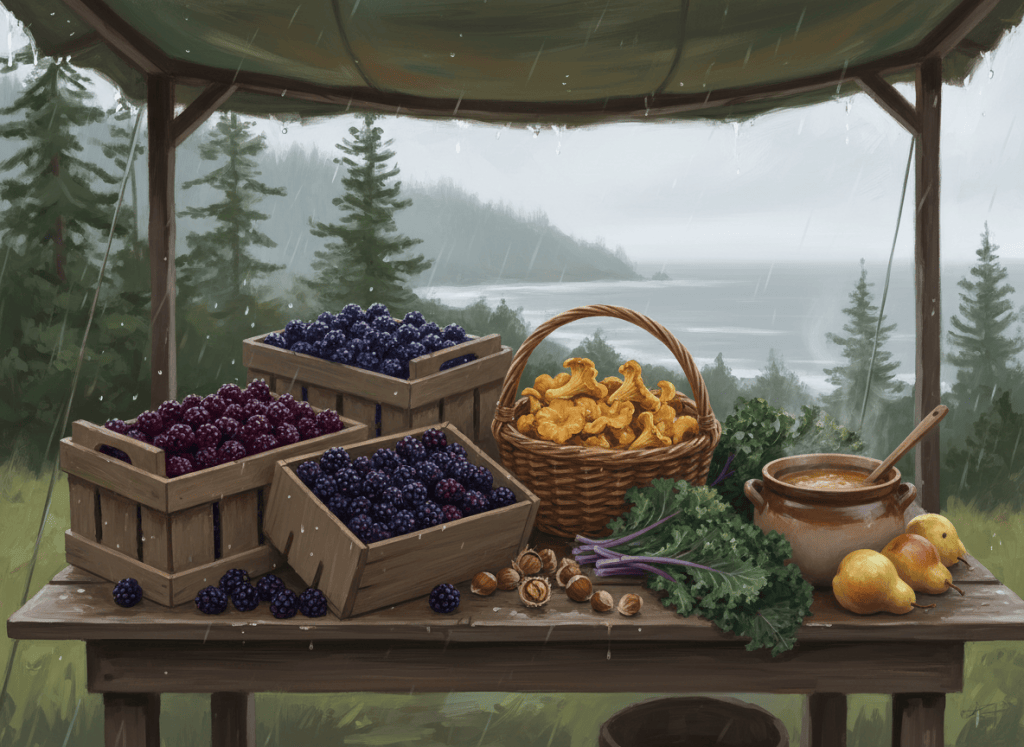
Eating with the seasons is one of the easiest ways to add more plants, more flavor, and more joy to your plate. Here’s what the Oregon Coast and nearby valleys offer through the year.
- 🌱 Spring: rhubarb, peas, asparagus, spring greens, radishes, and green onions. A season for light soups and big salads.
- ☀️ Summer: strawberries, then marionberries, a blackberry developed right here in Oregon, plus raspberries, blueberries, and roadside blackberries. Zucchini, tomatoes, and sweet corn from the valleys.
- 🍄 Fall: golden chanterelles (Oregon’s official state mushroom), pears (Oregon’s state fruit), apples, winter squash, and hazelnuts. Oregon grows nearly all of the hazelnuts produced in the United States.
- 🌧️ Winter: kale, cabbage, leeks, carrots, potatoes, stored squash, dried beans, and lentils. Perfect for slow, warming pots of soup while the rain comes down.
🍄 A safety note on wild mushrooms and plants. Some deadly mushrooms look very much like edible ones. Never eat a wild mushroom or plant unless an experienced local expert has identified it in person. The easiest safe choice is to buy chanterelles from a grocery store or a reputable market vendor. If you think someone has eaten something poisonous, call Poison Help at 1-800-222-1222 right away, or 911 in an emergency.
🍲 Three Oregon Coast recipes
Simple, whole-food, plant-based, and flexible. Use what your market has.
1. Rainy-Day Chanterelle & White Bean Soup
Serves 4 · about 40 minutes · fall and winter
You’ll need: 1 onion (diced), 3 garlic cloves (minced), 8 oz store-bought chanterelles or cremini mushrooms (sliced), 2 carrots (diced), 2 cans (15 oz) white beans (rinsed), 4 cups low-sodium vegetable broth, 1 tsp dried thyme, 3 cups chopped kale, 1 lemon, black pepper.
- In a large pot, cook the onion and carrots with a splash of water or broth over medium heat for 6–8 minutes, adding a little more liquid as needed so nothing sticks.
- Add the mushrooms and garlic and cook until the mushrooms soften and release their juices, about 8 minutes.
- Stir in the beans, broth, and thyme. Simmer 15 minutes. Mash some beans against the side of the pot for a creamier soup.
- Add the kale and simmer 3–5 minutes more. Finish with a squeeze of lemon and black pepper.
2. Marionberry Hazelnut Oat Crisp
Serves 6 · about 45 minutes · summer, or any time with frozen berries
Filling: 4 cups marionberries or blackberries (fresh or frozen), 1 tbsp cornstarch, 1 tbsp maple syrup, zest of half a lemon. Topping: 1 cup rolled oats, ⅓ cup chopped hazelnuts, ¼ cup unsweetened applesauce, 2 tbsp maple syrup, 1 tsp cinnamon.
- Heat the oven to 375°F. Toss the berries with the cornstarch, maple syrup, and lemon zest, and spread them in an 8-inch baking dish.
- Mix the topping ingredients until the oats are evenly coated, then scatter over the berries.
- Bake 30–35 minutes, until the berries bubble and the top is golden. Let it rest 10 minutes before serving.
Tree-nut allergy? Use pumpkin or sunflower seeds instead of hazelnuts.
3. Coastal Harvest Bowl
Serves 2 · about 35 minutes · fall and winter
You’ll need: 2 cups cooked farro or brown rice, 1 delicata squash (seeded and sliced), 3 cups chopped kale, 1 ripe pear (sliced), 2 tbsp toasted hazelnuts, 1 cup cooked lentils or chickpeas. Dressing: 1 tbsp white miso, 1 tbsp lemon juice, 1 tsp maple syrup, 2–3 tbsp warm water.
- Roast the squash on a parchment-lined sheet at 425°F for 20–25 minutes, turning once, until tender and browned. The skin is edible.
- Wilt the kale in a pan with a splash of water, 2–3 minutes.
- Whisk the dressing. Build bowls with grains, lentils or chickpeas, squash, kale, and pear, then drizzle and top with hazelnuts.
Watching sodium? Miso is salty; start with half the amount and add lemon for brightness.
🌧️ Flourishing in the rain
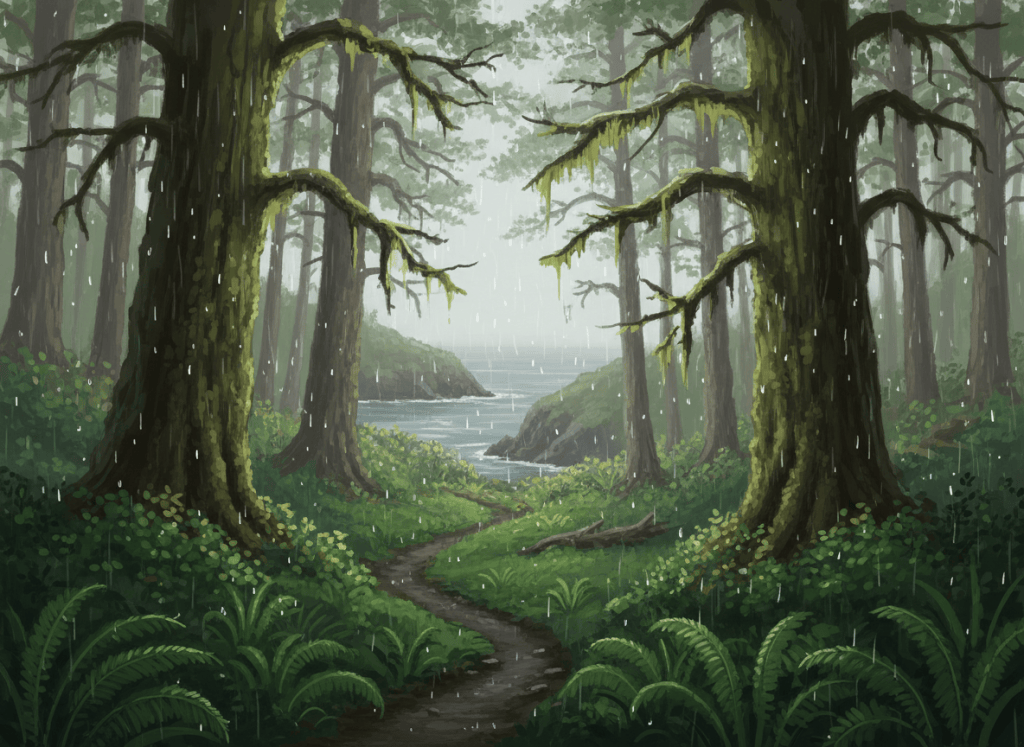
On the coast, you learn that gray skies don’t cancel life; they just change how you live it. A few coastal habits worth borrowing, wherever you are:
- Move anyway. A rain jacket turns a gray day into a forest walk. Even ten minutes under the spruce counts. Move With a Nurse™ →
- Chase the morning light. On dim winter days, step outside early, even under clouds, to help your body keep its sleep rhythm.
- Make soup for someone. A shared pot on a stormy night is nutrition and connection in one bowl.
- Notice the winter blues. Long, dark months can weigh on mood. If low mood lingers or makes daily life hard, talk with your clinician; it’s common and treatable. In the U.S., call or text 988 any time in a crisis.
About this page
Written by Nathanael Elijah Smith, FNP-C, DipACLM, with AI-assisted drafting · Independent external review: not yet completed · Last updated: September 26, 2026 · Illustrations created with AI assistance; they are artistic impressions, not photographs.
These recipes are general healthy-eating ideas, not personal medical or nutrition advice. If you have food allergies, kidney disease, diabetes, or take blood thinners or other medicines affected by diet, check with your clinician or a registered dietitian. Send a correction

