The Kitchen Monk Way of Eating™
also known as The Kitchen Monk Diet™
Plants over perfection.
The Kitchen Monk kitchen is entirely plant-based and free of added salt, oil, and sugar. You do not have to be.
Whole plants. Whole people. A whole lot of beans. Every recipe we share is whole-food, plant-based, and free of added salt, oil, and sugar, and we honor that real people have different cultures, budgets, kitchens, schedules, health needs, abilities, and starting points.
No food police live here. We’re too busy cooking beans. 🫘
🌱 Cook With The Plantrician Project
Explore Plantrician-approved recipes, the free CommUnity Potluck Guide with 10 recipes, and CulinaryRx. We link to the originals so creators receive attribution and traffic.
Independent curation; external recipes are not republished or claimed as ours.
🍲 Our Kitchen Standard
Everything Kitchen Monk publishes as a recipe, meal idea, menu, food photo, or cooking demonstration is 100% plant-based: no meat, poultry, fish, seafood, dairy, eggs, honey, gelatin, or animal fats or broths.
It is also free of added salt, oil, and sugar, including maple syrup, agave, and juice used as a sweetener. That is our first rule. When we adapt a recipe from someone else, such as the Department of Veterans Affairs’ free cooking guide, we show the salt-, oil-, and sugar-free way to make it.
🤝 Our Community Standard
You do not have to eat exactly like Kitchen Monk to belong here.
You don’t need to call yourself vegan. You don’t need to be salt-, oil-, and sugar-free. You don’t need a perfect diet. You don’t need to photograph your refrigerator or confess what you ate last weekend.
You belong. Nobody gets kicked out of the garden.
Come as you are. Add a plant. Learn a skill. Share a table. Progress grows better than perfection. 🌱
🥣📋 The Flourishing Bowl™ says: “I’m part of the care plan, not the whole care plan.”
Food is powerful, and food is not the only tool. Plant-based eating works best alongside movement, sleep, connection, purpose, and your care team. It never replaces medication, medical evaluation, mental-health care, or individualized nutrition therapy from a registered dietitian.
🚫 No Food Police
Kitchen Monk teaches food skills. It does not issue citations for your dinner.
Our recipes are entirely plant-based, whole-food, and free of added salt, oil, and sugar. Your personal choices remain yours. We’re here to help fill grocery carts, not occupy the moral high ground.
There is no wagon to fall off. Starting again still counts as starting. 🌱
📝 The Anti-Perfection Recipe
Ingredients
1 imperfect human
1 realistic kitchen
Whatever time is actually available
A handful of curiosity
Community, when available
Grace, as needed
Directions
Start where you are. Adjust frequently. Serve without judgment.
Food education should increase confidence, not fear. Kitchen Monk doesn’t sell miracles. We share tools, skills, evidence, stories, and community. We don’t label foods “clean” or “dirty,” and nobody here is “cheating.” If thinking about food ever starts to feel frightening or all-or-nothing, that’s a signal to talk with a professional, not to try harder.
Celebrating Chef AJ
Good food. Shared laughter. A moment worth keeping.
Chef AJ, thank you for the joy, encouragement, and love of whole plant foods you have shared with me. This memory from TrueNorth Health Center in 2023 still makes me smile.
Nathanael & Chef AJ · A carotenoid-scan moment · Tap the video to play or pause.
Thank you, Chef AJ, for being part of this chapter of my flourishing journey. Here’s to nourishing food, human connection, and making room for joy.
Stay connected with Kitchen Monk™ & Flourishing Nursing™
KEEP THE JOY GOING · CHEF AJ’S OWN YOUTUBE CHANNEL
Keep watching Chef AJ
Enjoy the recorded celebration below, then explore Chef AJ’s own uploads, newest first.
On YouTube, choose Play all to start at the newest available upload and continue through the collection. Use the playlist menu to choose another video; turn shuffle off to keep the order.
The collection opens on YouTube because its current player restricts playback on other websites. Continuous playback depends on YouTube, video availability, and your browser. YouTube updates the uploads list as new public videos become available.
Our vision: make nourishment visible — read Nathanael’s story
Our vision: make nourishment visible
“An ultimate goal of Flourishing Nursing™ and Kitchen Monk™ is to help everyone enjoy God-made whole plant foods so consistently that their nourishment is reflected in their carotenoid scores.
Thank you, Dr. Alan Goldhamer, for making the scanner available to help people learn about their carotenoid status. My hope is that more healthcare organizations and certified lifestyle medicine clinicians will explore carotenoid screening as a routine nutrition measure alongside traditional vital signs. That’s this lifestyle medicine nurse practitioner’s vision.”
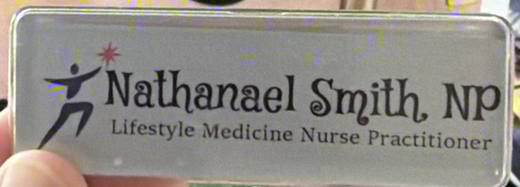
Nathanael Elijah Smith, MSN, APRN, FNP-C, DipACLM
Skin carotenoid scores can help estimate carotenoid-rich fruit and vegetable intake. They do not measure overall health or prove someone’s complete dietary pattern; this vision is not a claim that carotenoid screening is an established vital sign. Read the research.
More about this memory
🌿 A joyful moment with Chef AJ
A personal memory from Nathanael’s 2023 chapter at TrueNorth Health Center: connecting with Chef AJ around nourishing food and a flourishing life.
▶ Watch the Reel on Instagram · Read the TrueNorth 2023 story
Our promise, in one sentence
Every recipe, meal idea, and cooking example Kitchen Monk shares is 100% plant-based (no meat, fish, poultry, eggs, dairy, honey, lard, or animal broths) and free of added salt, oil, and sugar.
🌱 A rule for our kitchen, not a test for you. Being free of added salt, oil, and sugar is the standard for everything we publish. In your own kitchen, it’s an invitation: if today’s meal has a pinch of salt or a splash of oil, it’s still a meal, and you’re still welcome here. We’re here to help you grow, not to grade you. (Nobody gets kicked out of the garden. We’re rooting for you.)
What’s on the plate 🍽
🥦 Vegetables, lots of them
Especially dark leafy greens. Raw, steamed, roasted without oil, or in soup. Kale yeah.
🍓 Fruits
Fresh or frozen, berries often. Nature’s candy, no added sugar needed. Berry sweet.
🫘 Beans, lentils & peas
Satisfying plant protein and fiber; choose no-salt-added cans. When in doubt, add a bean.
🍠 Whole grains & starchy vegetables
Oats, brown rice, barley, corn, potatoes, sweet potatoes. Spud-tacular fuel.
🌰 Nuts & seeds, a small handful
Walnuts, flax, chia, pumpkin seeds, about an ounce a day. A little goes a long way, so don’t go nuts.
🌿 Flavor from the garden
Herbs, spices, garlic, onion, citrus, vinegars, salt-free mustard and salsa. Thyme to shine.
What we leave off the plate
Always: all animal products (meat, fish, poultry, eggs, dairy, honey, lard, gelatin, and animal broths); added salt; added oil; added sugar and other sweeteners such as maple syrup, agave, and juice; and refined, highly processed foods, including many processed vegan products.
Why no added salt, oil, or sugar? 🧂🫒🍬
Added salt, oil, and sugar make food extra-rewarding, and that can make it easy to keep eating past full. Too much sodium raises blood pressure for many people, and diets heavy in added sugar and refined foods are linked with heart disease, type 2 diabetes, and fatty liver disease. Cutting them out lets your taste buds reset, often within a few weeks, so vegetables, fruit, and beans start tasting sweeter and richer on their own. Salt your food with curiosity instead.
Honest about the evidence: the benefits of whole-food, plant-based eating are supported by a large body of research. Strictly salt-, oil-, and sugar-free eating has been studied far less; even its leading advocates say more clinical trials are needed. We choose it as our kitchen’s standard, and we’ll keep telling you plainly what is and isn’t proven.
How to start (one small swap at a time)
🥘 Oil-free cooking: sauté onions in a splash of water or no-salt-added vegetable broth; roast vegetables on parchment paper. Water you waiting for?
🧂 No added salt: buy no-salt-added canned beans, tomatoes, and broth, and brighten dishes with lemon, lime, vinegar, garlic, and herbs.
🍌 No added sugar: sweeten oatmeal with banana, berries, or a few chopped dates instead of honey or maple syrup.
🥫 Read labels: check for hidden salt, oils, sugars, and animal ingredients like whey, casein, and gelatin.
🥗 Build the plate: use the Flourishing Plate™, and on busy nights grab a Seven-Minute Rescue Meal™.
🩺 Please read: safety first
Take vitamin B12. Everyone eating only plants needs a reliable B12 source, from a supplement or fortified foods. Ask your clinician what dose is right for you.
Talk with your clinician before a big change if you take medicines for diabetes or blood pressure. Whole-food, plant-based, low-salt eating can lower blood sugar and blood pressure, sometimes quickly, and your doses may need to be adjusted to keep you safe. Never stop or change a medication on your own.
Some people need salt or specific diets, including people with certain heart, kidney, or blood-pressure conditions, people who faint easily, endurance athletes, and people on certain medicines. Ask your care team before cutting salt sharply.
Extra guidance helps during pregnancy and breastfeeding, for children and teens, for older adults with small appetites, and for anyone who needs to gain weight. A registered dietitian can help.
If food rules ever feel stressful or all-or-nothing, or you have a history of disordered eating, please set the salt, oil, and sugar rules aside and talk with a professional. Nourishment should feel freeing, not frightening.
Learn more from the source 📚
The Kitchen Monk Diet follows the whole-food, plant-based, salt-, oil-, and sugar-free approach described by Dr. Alan Goldhamer and Dr. Toshia Myers in an introduction published by the T. Colin Campbell Center for Nutrition Studies. It explains the food groups, suggested servings, shopping tips, and a two-day sample meal plan. Their approach includes some additional practices beyond ours, so read it as their model and talk with your clinician about what fits you.
Independent resource: Kitchen Monk is not affiliated with, sponsored by, or endorsed by the T. Colin Campbell Center for Nutrition Studies or TrueNorth Health. Link checked October 2026.
Keep growing 🌲
All six Food Tools · 🫘 Bean Principle™ · 🍲 Garden Pot™ · 🌈 Rainbow Garden™ · Healthy Convenience · 📅 Salt-, Oil-, and Sugar-Free 8-Week Meal Plan
Plants on the plate. Kindness in the kitchen. Progress, not perfection.
Now go forth and be the best vegetable-lover you can be-et. 🫶
Beans, lentils and whole grains in Scripture
Beans, lentils and whole grains are everyday foods you can build meals around. Try a bean chili, lentil soup or a bowl of oats or barley. If you’d like to read how these foods appear in Scripture, start with the passages below.
Beans and lentils. Esau eats lentil stew, David’s company receives beans and lentils, Shammah defends a lentil field, and Ezekiel is told to make bread with beans, lentils and four grains. Daniel’s food is called “pulse” in the KJV. Genesis 25:29–34, 2 Samuel 17:27–29, 2 Samuel 23:11–12, Ezekiel 4:9–17, Daniel 1:12–16.
Grain at the table. These passages describe roasted grain, grain provisions, fresh kernels and barley loaves. Leviticus 2:14, Leviticus 23:14, Joshua 5:11–12, Ruth 2:14–17, 1 Samuel 17:17, 1 Samuel 25:18, 2 Kings 4:42–44, Matthew 12:1, Mark 2:23, Luke 6:1, John 6:9–13.
Wheat, barley, millet and spelt. Millet appears in Ezekiel 4:9. Spelt is rendered “rie” or “fitches” in the KJV. Exodus 9:31–32, Deuteronomy 8:8, Judges 7:13, Ruth 1:22, Ruth 2:23, Ruth 3:2, Ruth 3:15–17, 2 Kings 7:1, 2 Kings 7:16–18, Psalm 81:16, Psalm 147:14, Isaiah 28:25, Ezekiel 4:9, Revelation 6:6, Revelation 18:13.
Grain in blessings and illustrations. Grain appears in descriptions of harvest and provision, and as an image in Jesus’ and Paul’s teaching. Genesis 27:28, Deuteronomy 11:14, Joel 2:19, Matthew 13:25–30, Mark 4:28, Luke 22:31, John 12:24, 1 Corinthians 15:37.
Roasted grain and kernels eaten from the head are clear examples of grain eaten intact. The passages about bread generally leave the milling method unspecified. Read the Hebrew wheat, Hebrew barley, Hebrew grain and Greek wheat and grain verse indexes for more.
Fruit, vegetables, spices, herbs, nuts and seeds in Scripture
Fruit · Vegetables · Spices · Herbs · Nuts · Seeds
Build on your whole-food plant-based meals with fruit, vegetables, nuts and seeds, and use herbs and spices for flavor. If you’d like to read how these foods and plants appear in Scripture, explore the passages below.
Fruit
Seed-bearing fruit, grapes, figs, pomegranates, raisins and olives appear in accounts of creation, harvest and hospitality. Genesis 1:29, Numbers 13:23, Deuteronomy 8:8, 1 Samuel 25:18, 1 Chronicles 12:40, Song of Songs 2:13, Song of Songs 4:13.
Vegetables
The Israelites remember cucumbers, leeks, onions and garlic. Daniel asks for vegetables and water. Paul calls for mutual welcome among people who eat differently. Numbers 11:5, Isaiah 1:8, Daniel 1:12–16, Romans 14:2–3.
Spices
Cinnamon and other aromatics appear in anointing oil and poetry. Cumin appears in farming and in Jesus’ teaching about justice, mercy and faithfulness. Genesis 43:11, Exodus 30:22–25, Song of Songs 4:13–14, Isaiah 28:25–27, Matthew 23:23.
Herbs
Bitter herbs accompany Passover. Mint, dill and other herbs appear in Jesus’ teaching, and Proverbs associates a simple meal of greens with love. Exodus 12:8, Numbers 9:11, Proverbs 15:17, Matthew 23:23, Luke 11:42.
Nuts
Jacob sends almonds and pistachios as gifts. Aaron’s staff bears almonds, and the Song of Songs describes a nut grove. Genesis 43:11, Numbers 17:8, Song of Songs 6:11.
Seeds
Scripture describes seed-bearing plants and farming. Manna is compared with coriander seed, and Jesus uses the mustard seed in a parable. Genesis 1:11–12, Genesis 1:29, Exodus 16:31, Numbers 11:7, Isaiah 28:25–27, Matthew 13:3–9, Matthew 13:31–32, Mark 4:30–32, 2 Corinthians 9:10.
These passages include meals, farming, gifts, worship and illustrations. Read each in context, especially passages about anointing oil, manna or parables.
Educational information only, not medical care or individualized nutrition therapy, and it does not create a clinician-patient relationship. No food pattern cures or guarantees protection from disease. Never change or stop medications without your clinician. In an emergency, call 911. Questions or corrections? rfjeep@gmail.com. Please do not send confidential medical information through this email address. Drafted with artificial intelligence assistance and reviewed by Kitchen Monk; independent review not yet completed; updated October 3, 2026.
🌿 Explore the National Health Association meal library
Kitchen Monk™’s November 2, 2026 National Health Association catalog reconciliation, reconfirmed by a November 9 public-source spot check, reports 527 deduplicated National Health Association source-version records, including separately documented recipe formulations; this is not a count of 527 unique dishes. The historical October 23, 2026 index contained 539 web/PDF entries (316 National Health Association website recipe-page entries plus 223 conference-PDF recipe entries), with overlaps: 539 is not a verified count of distinct recipes. These are our working inventory figures, not official National Health Association totals or a fresh complete recount. We credit original recipe authors and link to source recipes; videos and grocery-list features vary by entry. Check each source ingredient list before calling a particular recipe salt-, oil-, and sugar-free: some originals include sweeteners or prepared condiments. · Official National Health Association recipes ↗
Nutrition status: We have not yet calculated verified per-serving nutrition for this National Health Association collection. Estimates will be shown only after checking ingredient amounts, substitutions, recipe yield, and matching ingredients to documented United States Department of Agriculture FoodData Central records; otherwise we mark analysis pending. Cronometer is independent and optional: its free Basic account supports manually created recipes; paid Gold provides website recipe import and friend-to-friend recipe sharing; and Cronometer Professional can share custom foods, meals, and recipes with connected clients (Cronometer documentation updated October 29, 2026). These features do not create a universally public Cronometer URL for each recipe. Cronometer’s November 9, 2026 Gold-only ChatGPT plugin is a separate, optional, read-only connection for aggregate daily nutrition data. It cannot read individual foods or recipes, change diary entries, or publish National Health Association recipes; neither website is connected to it. Verify every ingredient match and serving yield before logging, and note that our sites do not sync any recipes or personal diaries to Cronometer. Kitchen Monk and Flourishing Nursing™ endorse the National Health Association for patient education. This is our own endorsement; the National Health Association has not endorsed or sponsored either site.
 “Thy word is a lamp unto my feet, and a light unto my path.”